
Maize Grass
Common names: Bhutta, maize, Corn.
Scientific Name: Zea mays.
Feed categories: Green roughages-Cultivated Maize fodder, Maize Silage or Maize Stover
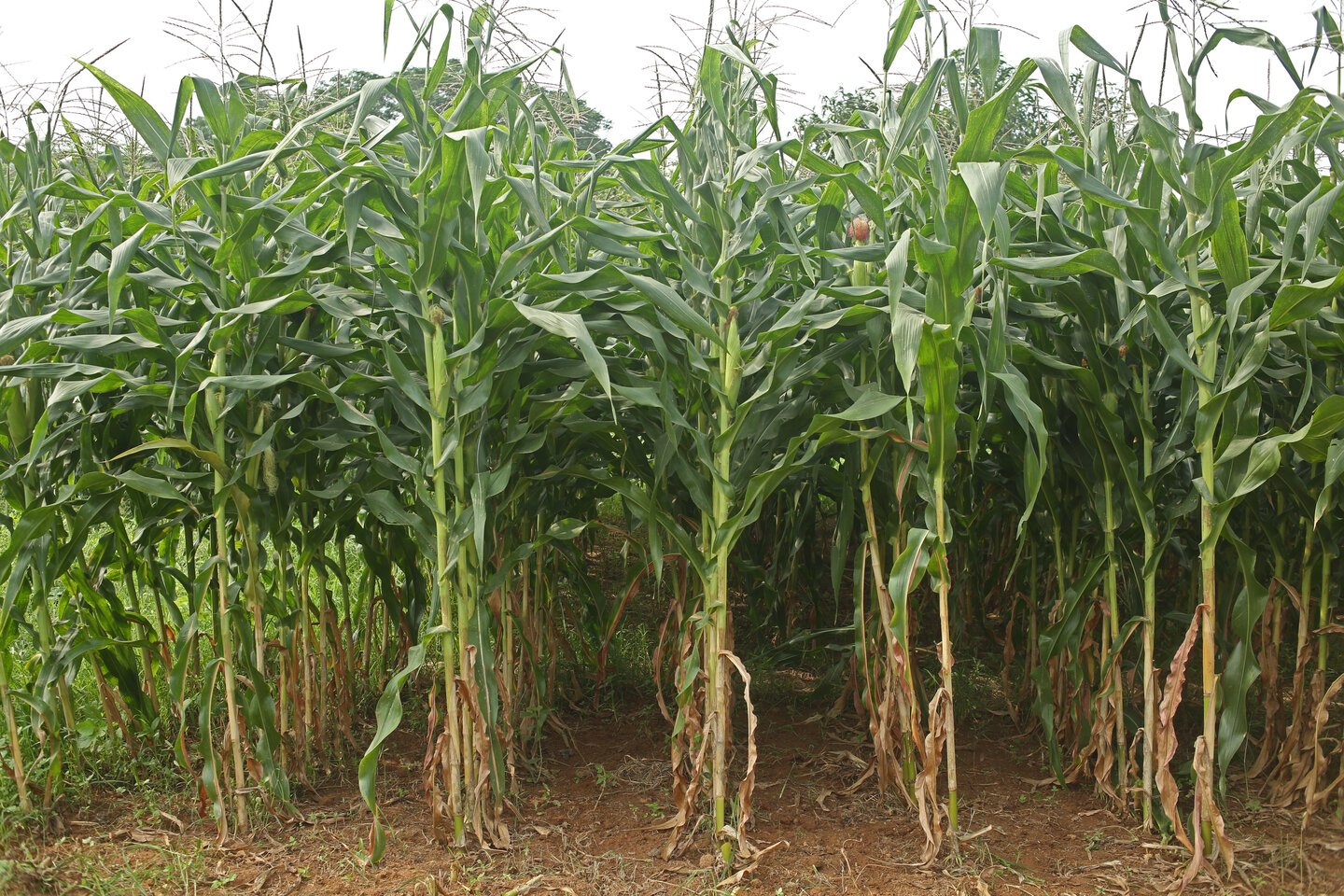
Physical Characteristics of Maize Grass: The salient characteristics of maize fodder are described as follows:
Stems or Stalks:
Tall, erect stems ranging from a few feet to more than ten feet in height, usually stout and cylindrical. Characteristics of corn stalks depend on the corn plant type and growing conditions. Stems are green during the growing season and turn brown as the plant ages.
Leaves:
Arrangement: The leaves of maize plant are alternately arranged along the stalk, forming a spiral pattern.
Shape: Maize leaves are long, flat, and lance-shaped with prominent parallel veins.
Tassel and Ear:
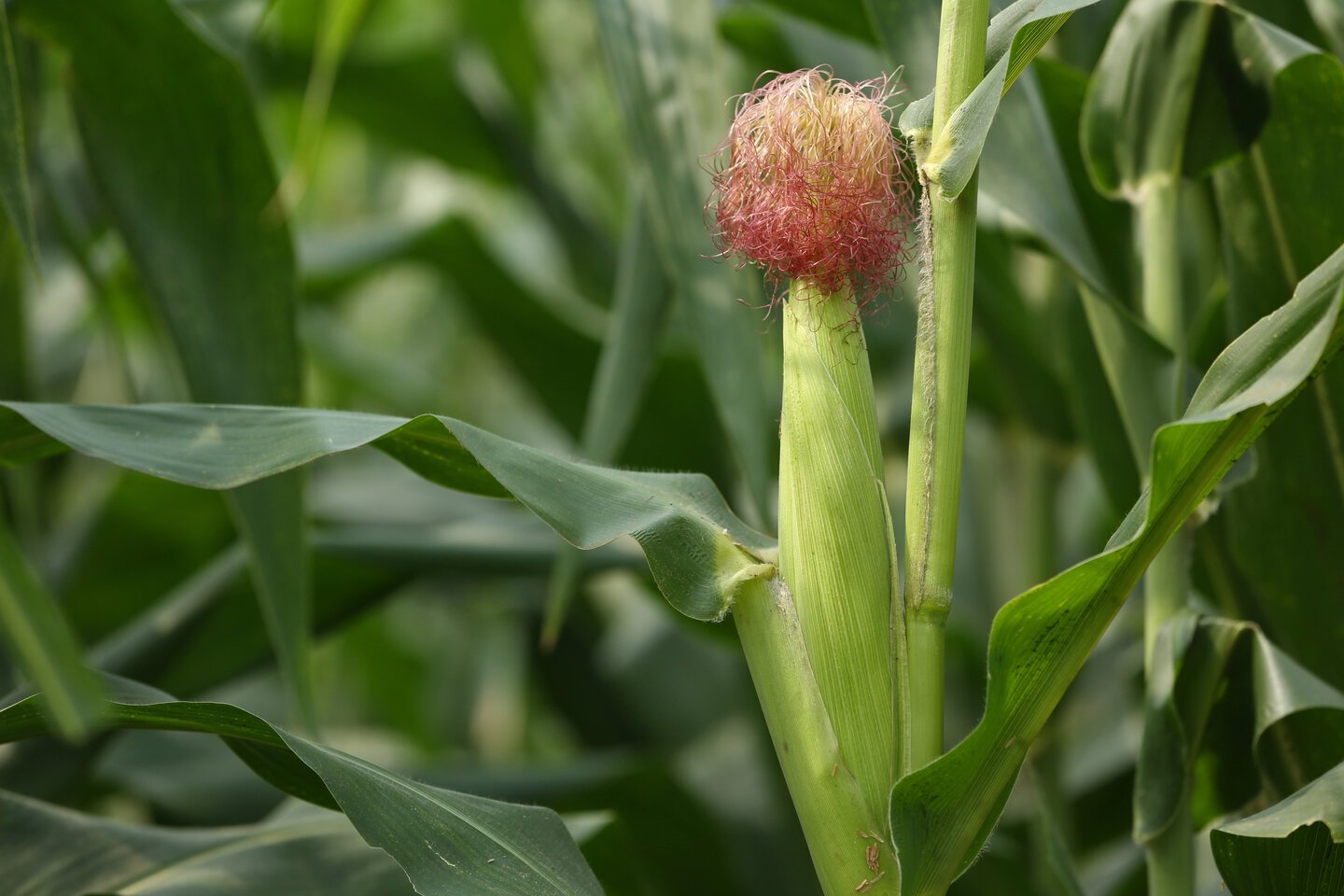
At the top of the maize plant, a conspicuous structure called the tassel emerges. The tassel consists of male flowers and is responsible for producing pollen. The ear, or cob, develops lower on the plant and contains female flowers. It is characterized by the presence of rows of kernels attached to a central cob, surrounded by protective husks.
Flowers:
The maize plant has monoecious flowers, meaning that both male and female flowers are found on the same plant. The tassel contains the male flowers, while the ear houses the female flowers.
Root System:
The maize grass develops a fibrous root system, consisting of numerous thin roots that spread laterally in the soil to anchor the plant and absorb water and nutrients.
Culm (Internode):
The stalk or culm is segmented into internodes, each representing a section between two nodes. The internodes provide structural support to the plant.
Cob and Kernels:
The cob is a central structure within the ear, and it consists of a central axis surrounded by tightly packed rows of kernels. Maize kernels, commonly known as corn, vary in color and arrangement depending on the variety. They are attached to the cob in rows.
Production / Availability:
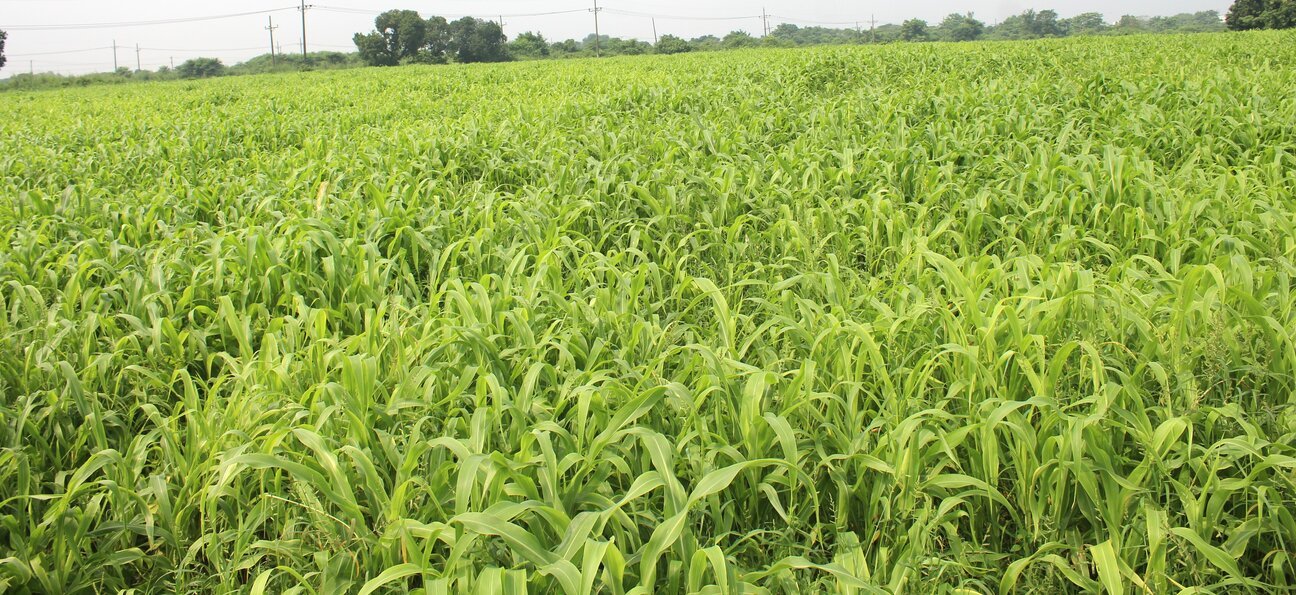
Maize (Zea mays) is an important crop in Bangladesh's agricultural sector. Just as the young green maize is a nutritious and delicious feed for cattle, its seeds are used for humans, poultry and fish. Among Varieties of maize, Barnali, Shubhra, Khai-Bhutta, Mohor, Bari Bhutta-5, Bari-Bhutta 6, Pacific-11, Bari Hybrid Bhutta and Hybrid Bhutta, Quality Protein Maize are available in Bangladesh. Many hybrid corn plants remain green even after harvest. They can be used as good fodder. At present, maize is widely grown in Bangladesh. About 80 percent of the total maize cultivation is cultivated in the northern part of the country and Dhaka division. Leguminous pulses such as cowpea, mashkalai, khesari, dhaincha etc. can be cultivated as inter-crop (combined farming) crops with maize.
In Bangladesh, maize is cultivated in both the Rabi (November-February) and Kharif (March-October) seasons. Maize grows well on alluvial soils. It can be grown in loam or clay loamy soils with drainage and even in sandy loamy soil if enough organic fertilizer is applied. Maize cannot tolerate more rain and more cold. It requires a warm and temperate climate. The crop grows well in slightly acidic to neutral soils (pH 5.5-7.5).
Land should be properly prepared for maize fodder cultivation. Rotten cow dung, farm produce or household waste rotted manure at the rate of 20-25MT per hectare should be well mixed with the soil during cultivation. Additional dung manure 50 kg urea, 70 kg TSP and 30 kg potash per hectare should be applied at the time of land preparation. 35 to 40 kg of urea fertilizer per hectare should be applied depending on soil fertility after 30 days of maize sowing. Maize seeds can be sown by scattering or in lines or rows. The line to line distance is 30 cm; seed to seed distance is 5 cm and 3-5 cm deep. 24-28 kg and 18-20 kg of maize seed need per hectare for fodder and grain production respectively. If corn seeds are sown during the dry season, water irrigation is required about 3-4 times every 10-15 days. Excessive water irrigation is harmful to corn plants. When the maize plant is 15-20 cm tall, it should be kept free of weeds by hoe or spade. As a green grass, after 8-9 weeks of sowing corn, the plant should be cut while it is still green, i.e. before flowering and mocha. However, at present, to obtain more nutritious corn grass for cattle feed, after the corn kernels turn yellow, the plants are cut into pieces to make silage. The fodder is ready between 60-70 days but for grain production, it takes about 90-110 days. The yield of fodder is between 60-65 ton/ hectare. The grain is produced 6-10 and 4-5 MT per hectare of hybrid maize in the Rabi and the Kharif season respectively. Moreover, about 25-50 MT of maize straw is produced per hectare per season.
Uses of Maize
None of the part of a maize plant can be thrown away. Maize grass, grain or corn is an excellent feed for livestock, poultry and fish. When cultivated as fodder, the maize mocha is yellow in color and can be cut into 2-3 inch pieces and stored as silage. On the other hand, when the corn kernels are mature, the abandoned corn straw after mocha collection can be stored as silage to make excellent quality animal feed. It should be noted that corn straw remain green and fresh even after collection of corn kernels from hybrid corn. The nutritional value of this hay is equivalent to that of green grass in many respects. Maize straw can be made into silage twice a year and used as animal feed throughout the year. Corn kernels are an excellent energy source for livestock, poultry and fish.
Cattle can be fed any amount of corn silage or corn straw silage. A mature cow or fattening bull consumes a total of 25-35 kg of maize silage daily. Adult goats and sheep can be fed this silage at the rate of 1.5-2.0 kg per day. An adult cow can eat 18-25 kg of corn straw silage. Maize grains can be used up to 40% in grain feed for cows, fattening bulls, goats and sheep.