
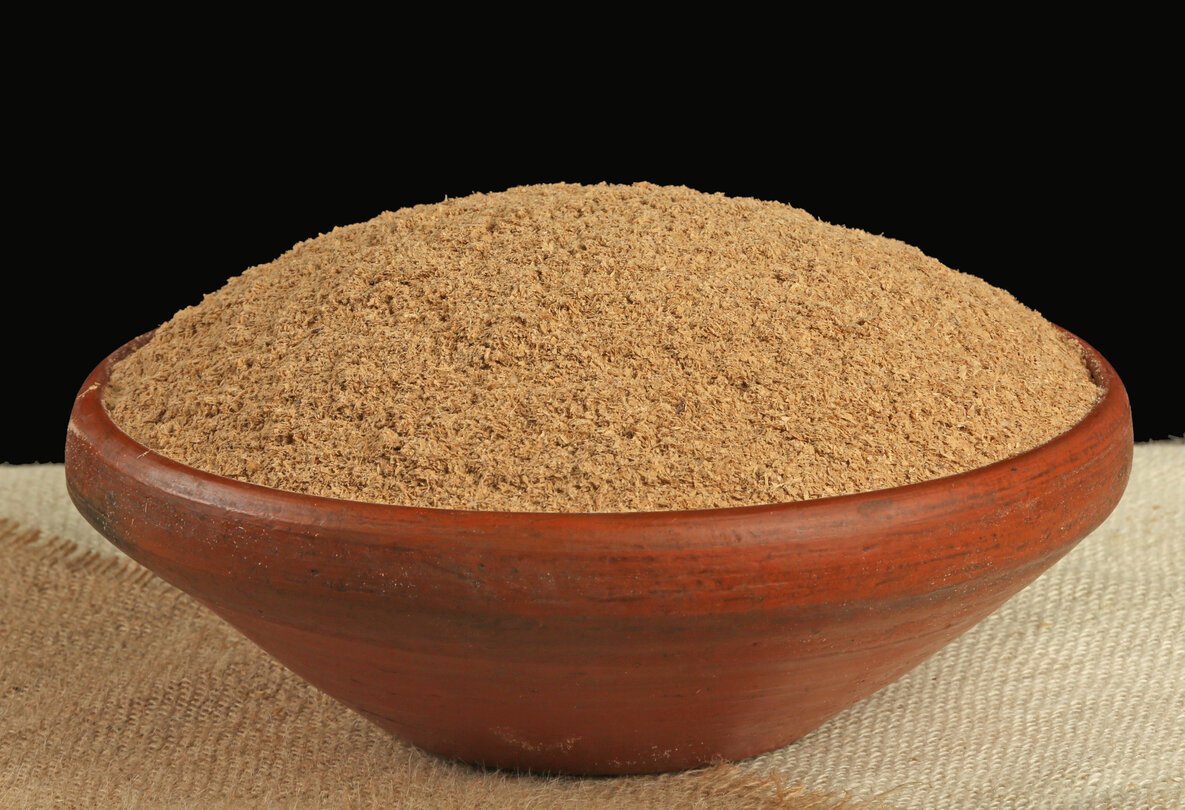
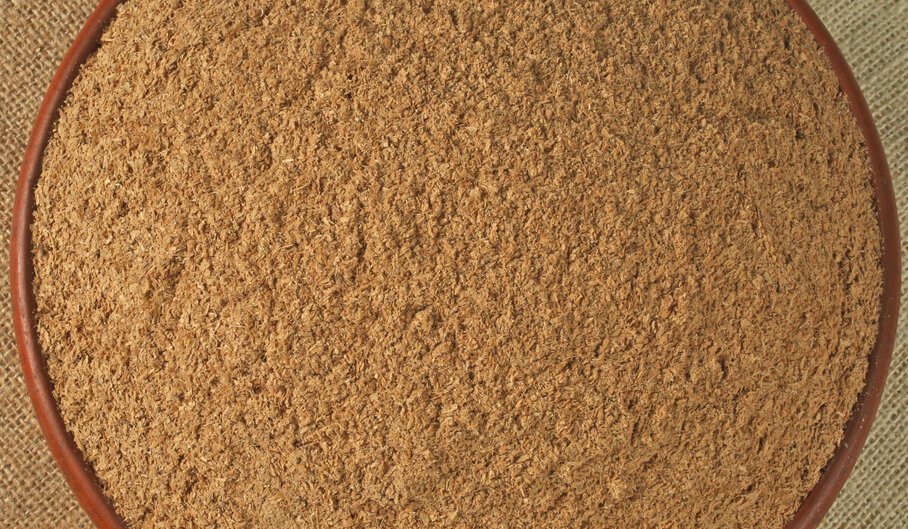
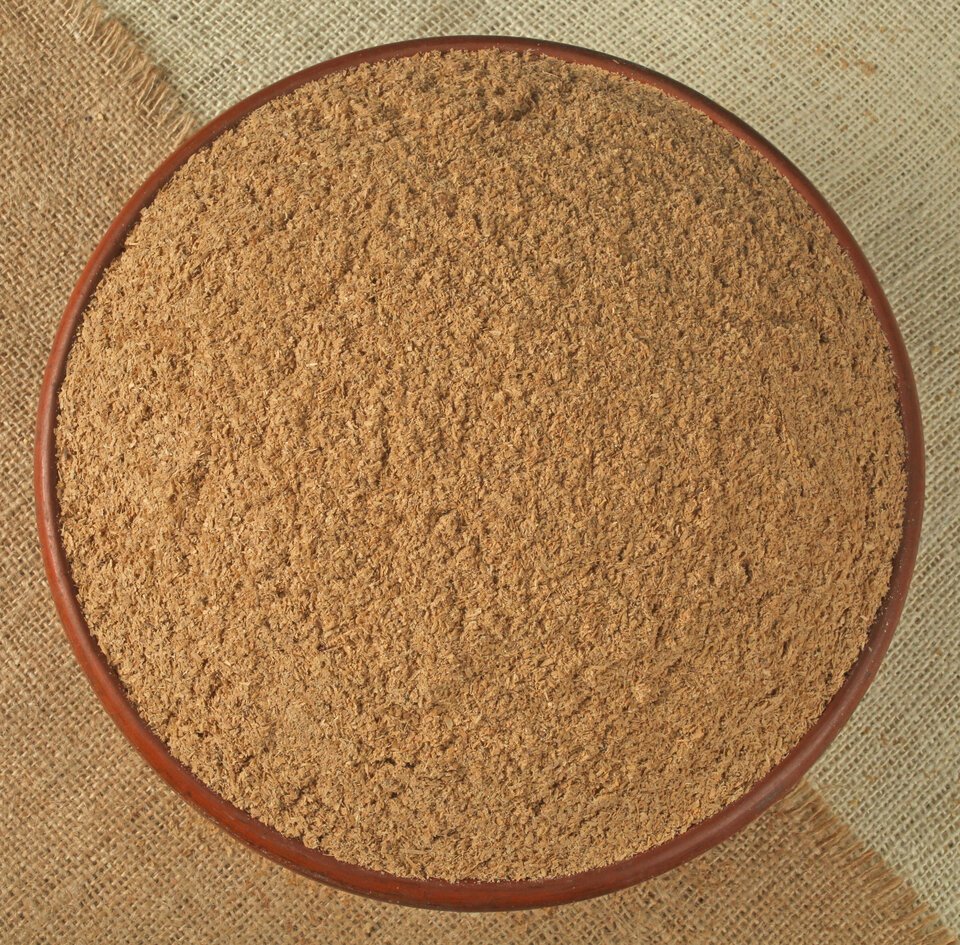
Common name: Rice bran, Full-fat rice bran, defatted rice bran, de-oiled rice bran, rice pollards, rice polish, rice mill feed
Scientific Name: Oryza sativa L
Feed categories: Cereal grains and by-products
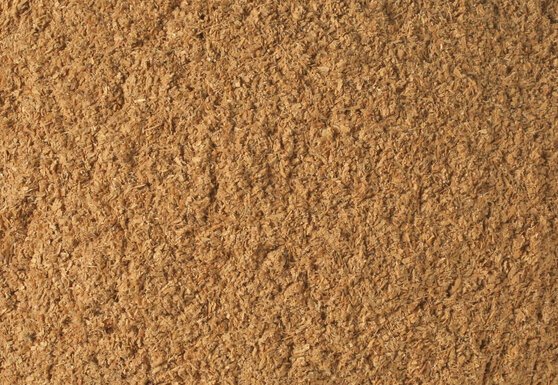
Physical Characteristics: Rice bran or rice polish has a tan to brown color and smells like milled rice, fresh, not rancid, or musty, slightly oily, unstable meal produced as a byproduct of the rice milling process. Rice bran is the outer brown layer of rice and includes several sub-layers within the pericarp and aleurone layers, but some sub-aleurone and endosperm material and breakage from white rice is usually included in the bran fraction and can make up 20–25% of the bran. It should appear to lack cocoons or insect infestations, be free from foreign materials, and be absent of lumps or cakes. Rice bran without oil extraction tends to go rancid because of its high fat content. For this reason, it should be used as soon as possible after milling, and if in storage, there should be adequate ventilation.
Description: Rice is the staple food of Bangladesh. During rice processing and milling, rice bran or polish is produced, which is used as animal feed. Rice bran composition depends on rice type and milling capacity. Rice bran, rice husk, polished rice, and broken rice accounted for 10.0%, 20.0%, 50-60%, and 1.0-17.0%, respectively. Rice bran or polish is preferred because of its functional properties. It consists of fat, protein, crude fiber, and ash. It is also a rich source of B and E vitamins. Additionally, it has trace levels of antioxidants.
Production/Availability: Bangladesh ranks as the third-largest producer of rice globally, reaching about 39.1 million tons in 2023. Over 3.5 million MT of rice are used as domestic animal feed each year (FPMU research report, 2023). By-products of rice milling, including bran and rice polish (the finely ground bran and starch resulting from polishing), are used as livestock feed. Rice byproducts have been increasingly used in the animal feed industry for the production of animal feed. De-oiled rice bran (DORB) and broken rice are widely used in aqua, livestock, and poultry feed industries as fillers in various feed formulations at a cheaper cost than other imported feed ingredients. Two by-products of rice milling, rice bran, and rice polish, are used in commercial feed production.