Rice Straw
Common Name: Straw, Paddy Straw,
Scientific Name: Oryza sativa
Feed Categories: Roughage, Fibrous crop by-products, Low-quality roughage
Physical Characteristics
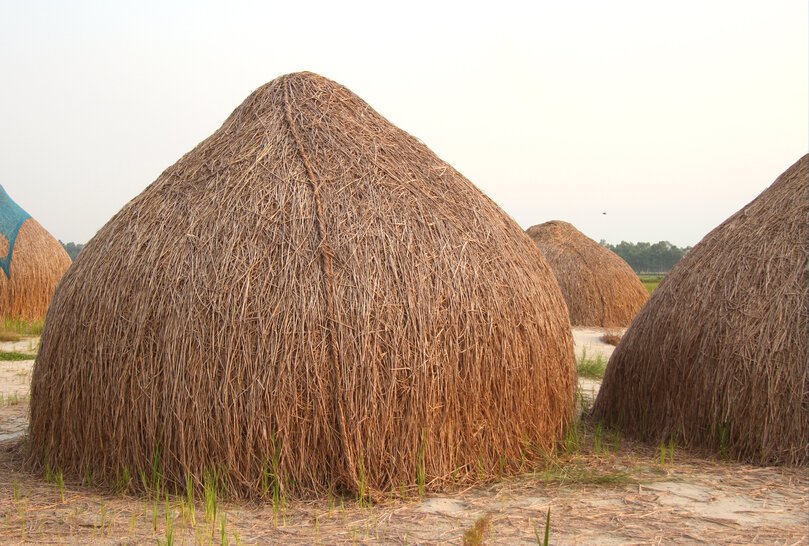
The traditional golden color bears a likeness to its grain husks color. Its color varies depending on the drying and processing systems, and it often becomes dark when it deteriorates during imperfect conservation.
Production/Availability
Rice straw, also known as paddy straw, is mature rice plant biomass gathered at various plant heights and used as fibrous by-products after the grains have been threshed. In Bangladesh, it is mostly used to feed ruminant animals and is occasionally left in the field until it is plowed back into the soil or burned in the open air. Approximately 70% of the roughage provided to livestock is derived from crop by-products, whereas rice straw comprises approximately 87% of the dry roughage. Insufficient supply of green grass has led to rice straw becoming the primary feed resource for ruminants in Bangladesh.
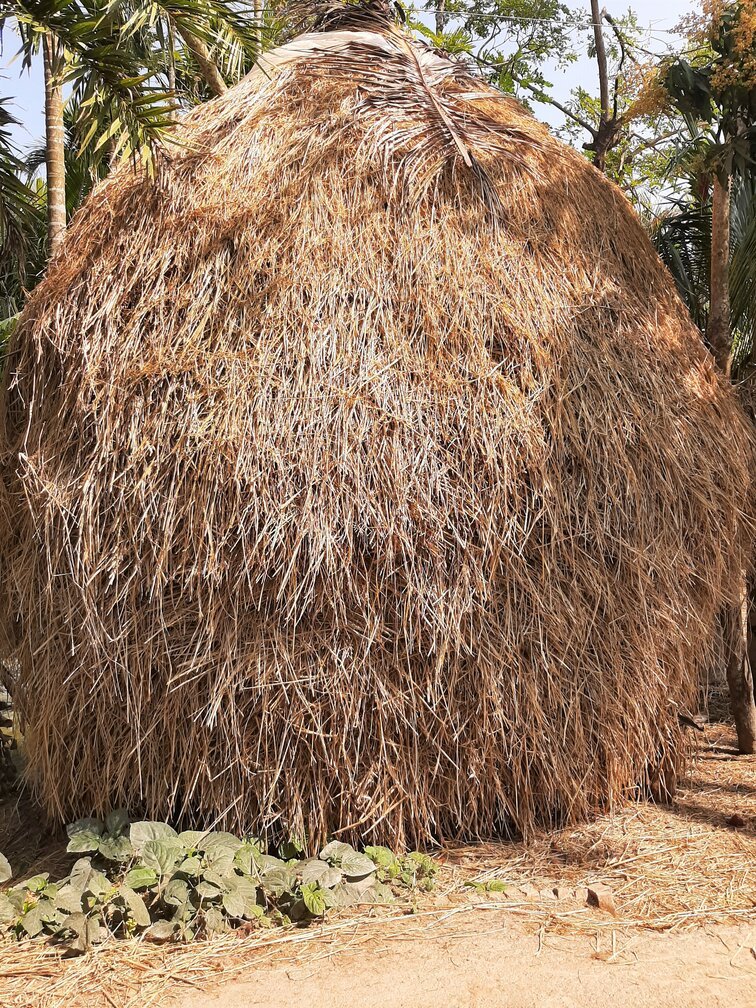
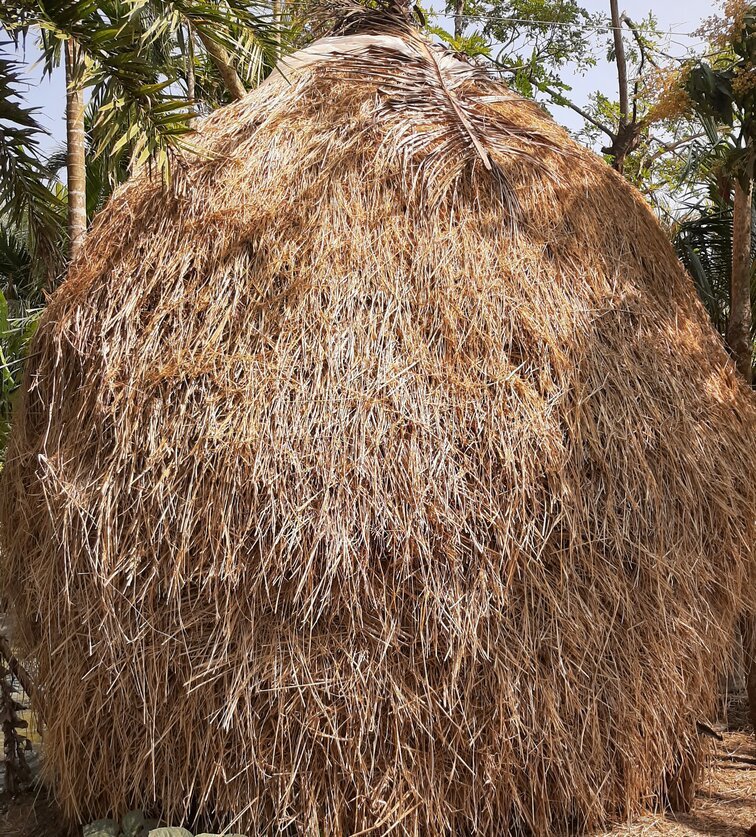
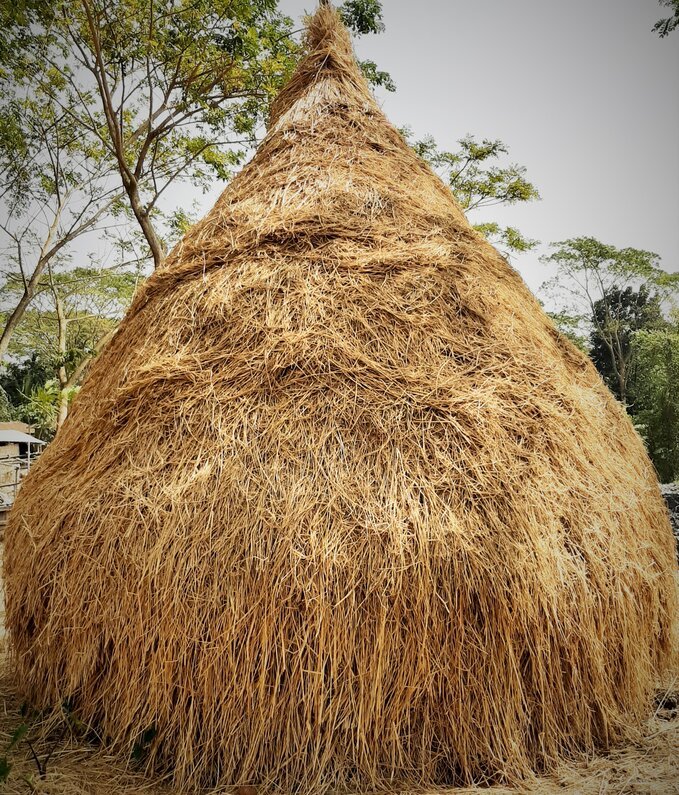
Farmers store dry rice straw in magnificent traditional straw stacks, feed it to their animals regularly, or sell it in tiny or large bundles. Boro rice straw is a substantial supply, and roughly 8.0 percent to 10.0 percent of it is lost during the monsoon when humidity and rain disrupt the sun-drying process. Intermediaries collect and market dry rice straw in cattle-populated areas, carrying bulk rice straw in vehicles, resulting in prices varying from BDT 7,000 to BDT 15000 per ton depending on season and region.
The annual rice straw production may be about 36.6 million tons of straw yield compared to that of grain is 1:1 in Bangladesh. Boro constitutes 53.7% of the rice straw, while Aman is 38.8% and Aus is 7.54%. The High Yielding Variety (HYV) of rice constitutes 84.0% straw, Hybrid 11.3%, and the rest 4.69% comprises local varieties (BBS, 2020). The variations in genotypes and cropping seasons and harvesting practices affect rice straw's phenotypical and nutritional composition. It significantly affects their quantitative and qualitative availability and ruminant animal’s dietary & nutritional planes.
Nutritional Compostion of Rice Straw
|
Main analysis
|
Unit
|
Avg
|
SD
|
Min
|
Max
|
Nb
|
|
Dry matter
|
% as fed
|
85.94
|
11.48
|
40.21
|
96.40
|
59
|
|
Crude protein
|
% DM
|
4.82
|
1.80
|
2.00
|
10.98
|
65
|
|
Crude fibre
|
% DM
|
33.74
|
4.03
|
24.00
|
40.33
|
21
|
|
NDF
|
% DM
|
72.78
|
6.23
|
57.78
|
86.00
|
36
|
|
ADF
|
% DM
|
47.67
|
7.92
|
31.57
|
65.21
|
44
|
|
Lignin
|
% DM
|
4.8*
|
0.8*
|
2.9*
|
7.1*
|
149*
|
|
Ether extract
|
% DM
|
1.37
|
0.31
|
0.92
|
2.00
|
15
|
|
Ash
|
% DM
|
15.60
|
6.39
|
4.60
|
43.76
|
36
|
|
Gross energy
|
MJ/kg DM
|
16.24
|
0.57
|
15.32
|
16.84
|
4
|
|
ME (Metabolizable energy)
|
MJ/kg DM
|
6.04
|
0.40
|
5.61
|
6.68
|
8
|
|
Calcium
|
g/kg DM
|
2.83
|
1.25
|
1.00
|
4.80
|
26
|
|
Phosphorus
|
g/kg DM
|
1.10
|
0.41
|
0.46
|
2.00
|
25
|
*Indicates that the value was cited from Feedipedia; NDF= Neutral Detergent Fiber: ADF= Acid Detergent Fiber;
Nutritional aspects of rice straw
According to Göhl (1982) and Drake et al. (2002), the poor quality of rice straw is determined by several parameters, such as variety, N-fertilization, and lignin concentration of the cell membrane, which is induced by the stage of maturation, harvesting time, and storage, as well as the local climate. It is deficient in crude protein (2–7%) and has a large amount of silica (Van Soest 2006), which acts as a barrier to digestion by silicifying the leaves' cuticular layer more than the stem (Drake et al. 2002). The lack of P, Cu, Zn, Ca, and NaCl in rice straw does not satisfy the nutritional needs of animals (Gowda and Prasad 2005). Additionally, it has low metabolizable energy (ME) and palatability (Odai et al. 2002) compared to maize silage, which reduces nitrogen (N) utilization. It also encompasses a high neutral detergent fiber (NDF) concentration that may result in reduced dry matter (DM) intake and directly affect animal growth and milk yield (Kanjanapruthipong and Thaboot 2006). Another obstacle is retaining the high level of oxalates (1–2% of DM), which is a major concern for livestock production because it passes out calcium (Ca) from the body through feces and urine (Jackson 1979, Van Soest 2006). Therefore, rice straw reduces the rumen's overall digestibility, passage rate, N fermentation, and by-pass protein.
To offset the deficiency or nutritious value of rice straw, supplementation or treatment approaches are utilized. For producing optimal milk and meat output, rice straw must be supplemented with energy and protein; 7–10% CP is required for good roughage quality to meet animal needs (Hariyadi and Santoso 2010). Legumes are often used as supplementary protein sources and Akbar et al. (2000) showed that legume fodder (Lathyrus sativus) seed broadcast with standing Aman rice intensified fodder yield (11.0 tons/ha), soil organic matter, and N, as well as increased milk yield (20% and 14%) in on-farm and research station studies, respectively. Kusmartono (2007) clarified that Gliricidia (Gliricidia sepium) or cassava leaves together with jackfruit wastes (JFW) as energy sources have positive impacts on the dietary value of a rice straw-based diet, as well as on animal performance with cassava leaf hay. The addition of Gliricidia (Gliricidia sepium) and Leucaena (Leucaena leucocephala) to ammoniated rice straw (ARS) resulted in increased DM intake and digestibility, subsequently improving the N utilisation and live weight gain at the rate of 19.3, 34.6, and 33.9 g/d for the ARS, Leucaena and Gliricidia, respectively (Orden et al. 2000). Green plants, such as Napier grass, are an excellent source of protein when supplemented with rice straw to minimize feed expenditures and enhance milk fat without compromising milk output or other components (Ngo Van Man and Wiktorsson 2001, Wittayakun et al. 2005, Kusmartono 2007). Significantly enhanced feed intake and digestibility were found when maize silage was fed in addition to rice straw (Liu Xiao Hui et al. 2006).
Various processes, including mechanical, chemical, heat, and pressure, are utilized to enhance the dietary quality of rice straw, consequently enhancing feed intake, rumen fermentation, and digestibility. For example, chopping and milling rice straw may improve the rumen passage rate and feed intake (Doyle et al. 1986). Urea treatment is the most common and easiest method for smallholder farmers, which may improve by 18% the digestibility of the rice straw (Van Soest 2006). Additionally, the buildup of treated rice straw and grass or legumes improved roughage quality, which led to an increase in dairy cow milk production (Khan et al. 1990, Bhaskar et al. 1992, Ngo Van Man and Wiktorsson 2001, Oddoye et al. 2002, Wittayakun et al. 2005